
Your tickets are the qualification. Lead with them.
No ladder of job titles to lean on? Build a CV around your cards, plant sign-offs, site hours and a clean safety record.
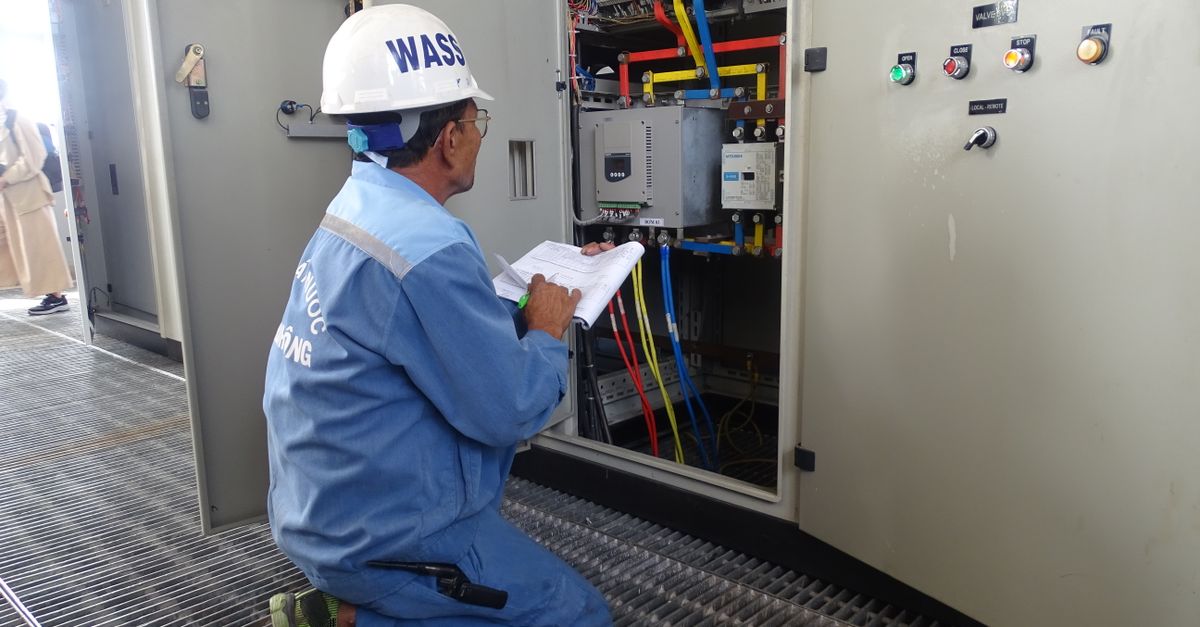
Your qualification isn't a job title. It's a card in your wallet.
Most CV advice assumes you climbed a ladder of job titles and can prove yourself with bullet points about growth and impact. That isn't how a trade works. Your proof is a card in your wallet, a sign-off on a machine, a logbook of site hours and a record of turning up and going home in one piece. A CV that buries all that at the bottom of page two is doing you no favours.
Hiring managers and agency recruiters read a trades CV for three things: can you legally do the work, can you operate what's already on site, and will you still be there next Tuesday. Answer those in the first fifteen lines and the rest of the page is a formality. Answer them last and you get filtered out before anyone reaches your work history.
If you've never owned a CV file, that's normal in a trade where work arrives by phone call and the agency already has your details. The HRLens CV builder asks about your cards, expiry dates, the plant you're signed off on and the sites you've worked, then lays it all out in a plain single-column format that an agency's screening system and a foreman can both read without squinting.

Three things that belong above your work history
Licence numbers, written in full
Card or scheme name, level, registration number, issuing body, expiry date. One line each, plain text, no logos.
Plant you're signed off on
Name machines by their proper category. A telehandler ticket and a counterbalance forklift ticket are not the same thing.
Your safety record
Site inductions, supervisory cards, toolbox talks you've run. Put it where it gets read, not in a closing line.
The bits nobody tells you how to write
Twelve short contracts don't make you a risk
Group them under the agency or principal contractor, then list the sites and dates beneath. It reads as demand, not churn.
Site hours count as experience
Say how long you were on each project and which stage you covered: first fix, second fix, commissioning, shutdown, handover.
Tailor to the advert without rewriting anything
Reorder your cards so the ones the job ad names sit first. Same CV, different opening three lines.
One file, PDF, sent straight from your phone
A single-column PDF keeps its layout when a screening system parses it. No photo, no side panel, no clever grid.
Same experience, two CVs
What changes when the tickets come first
| What a recruiter checks | Generic CV template | A CV built around your tickets |
|---|---|---|
| Qualifications | Dropped into a skills list at the bottom | Named cards with numbers and expiry dates on page one |
| Plant and equipment | "Experienced with various machinery" | Each category you hold, with the scheme and year assessed |
| Short contracts | Fifteen entries that read as job-hopping | Grouped by agency or contractor, with sites and stages |
| Safety | One line claiming you're safety conscious | Inductions, site cards and supervisory tickets, near the top |
| The file itself | Columns and a photo the parser mangles | Single-column PDF that survives an agency system |
Get your tickets onto one clean page
Answer a few questions about your cards, the plant you run and the sites you've worked. Walk away with a CV that gets read.
Straight answers
Where do I put my licence numbers on a CV?
In a short qualifications block in the top third of page one, above your work history. Give each card its own line: scheme or card name, level or category, registration number, issuing body, expiry date. Plain text, no logos or icons. Recruiters and screening software both look there first, and a ticket nobody can verify tends to get treated as no ticket at all.
How do I list plant and equipment I'm ticketed on?
Group by category rather than by job. Write the scheme, then the categories you actually hold, for example counterbalance forklift, telehandler, mobile elevating work platform. Add the year you were assessed. If you've operated a machine regularly without a formal ticket, put that under practical experience instead, so nobody assumes you're certified when you aren't.
I've had twenty short contracts. Won't that look unstable?
Not if you present it properly. Group short contracts under the agency or principal contractor that placed you, then list each site with dates and the stage you covered. Twenty entries scattered down two pages reads as churn. The same twenty sitting under three headings reads as steady, continuous demand for your trade.
Should I show an expiry date if my card runs out soon?
Show it anyway. A card expiring in six weeks is a scheduling detail, not a disqualification, and hiding it costs you trust the moment someone checks. Write the expiry month and year, and add "renewal booked" if it is. Sites plan inductions around card validity, so being upfront makes you easier to place.
Do I even need a CV if the agency finds my work?
You need one the moment you want work the agency isn't offering: a direct role, a better rate, a main contractor who hires straight off the books. Agencies also reformat your details into their own template, and the first thing squeezed out is usually your ticket detail. Owning the file keeps your qualifications exactly as you wrote them.